Included among the 7 Natural Wonders, this
extinct volcano collapsed over 2 million years ago turning it into a beautiful natural enclosure. In the early 1950′s the enormous Serengeti National Park was declared; encompassing the present Serengeti plus the Ngorongoro area and surrounding Crater Highlands. However much of the southern side of this was already being used by the Maasai, resulting in a split into the present-day Serengeti National Park, and the current Ngorongoro Conservation Area. The conservation area now encompasses a large area of the short-grass plains on the southern side of the Serengeti Plain and also the Ngorongoro Highlands, a range of largely extinct ancient volcanoes on the west side of the Great Rift Valley.
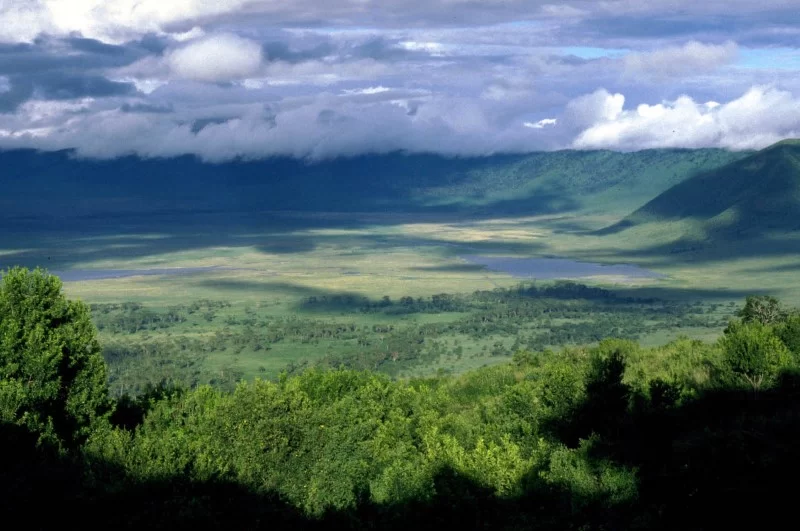
The showpiece of the conservation area is undoubtedly the Ngorongoro Crater itself. Declared a World Heritage Site

in 1978, this is the largest intact volcanic caldera in the world. It measures about 12 Miles~19km in diameter, with walls of 1900 ‘~610m in height. However you measure it, it’s no wonder the this Crater is numbered among the 7 Natural Wonders of the World.
The mineral-rich floor of this spectacular bowl is largely flat, open and covered in nutritious grasses –enjoyed by large herds of zebra and wildebeest which graze here. These extensive open plains are also home to herds of buffalo, Thomson’s gazelle, Grant’s gazelle and topi. You’ll also find East Africa’s best population of black rhino here which can be seen in open grasslands. Breeding herds of elephant pass through the Ngorongoro Crater itself only rarely, but you will see a scattering of old bulls, including some of the biggest tuskers remaining in Africa today.
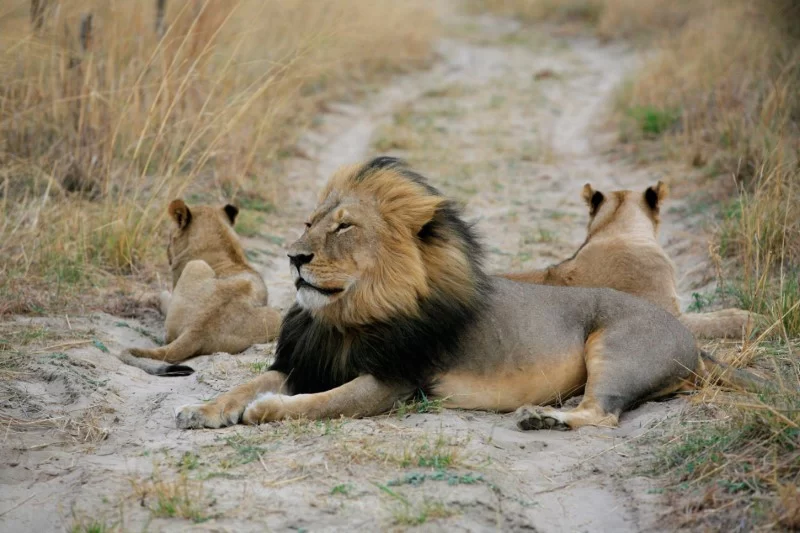
No Ngorongoro safari would be complete without the predators, which are often highly visible on the crater floor. The Crater’s lion population varies significantly over time, the one constant being their complete adaptation for safari vehicles as evident with their hunting within yards of a vehicle, and when exhausted even seek their shade beside it. Spotted hyena are even more common here, often competing with the lion, and there’s are a small but growing number of cheetah. Leopards are around, especially in the vicinity of the Lerai Forest – a small forest of fever trees notable for their yellow bark. Side-striped and the lovely golden jackal are often seen skulking around, while bat-eared foxes area rarer sight.